
Industrial Heat Transfer Fin Tube Solution India
Introduction
Efficient heat transfer is essential for maintaining productivity, energy efficiency, and process stability across modern industrial facilities. In applications where gases, air, steam, water, or other fluids need to be heated or cooled, finned tube technology can provide a practical solution for increasing heat-transfer performance without requiring excessive equipment size.
An industrial heat transfer fin tube solution India is designed to improve the surface area available for heat exchange, particularly where one side of the heat exchanger has a lower heat-transfer coefficient, such as air or gas. Selecting the right tube material, fin configuration, dimensions, and operating parameters is essential for achieving reliable performance and long service life.
What Is an Industrial Heat Transfer Fin Tube Solution?
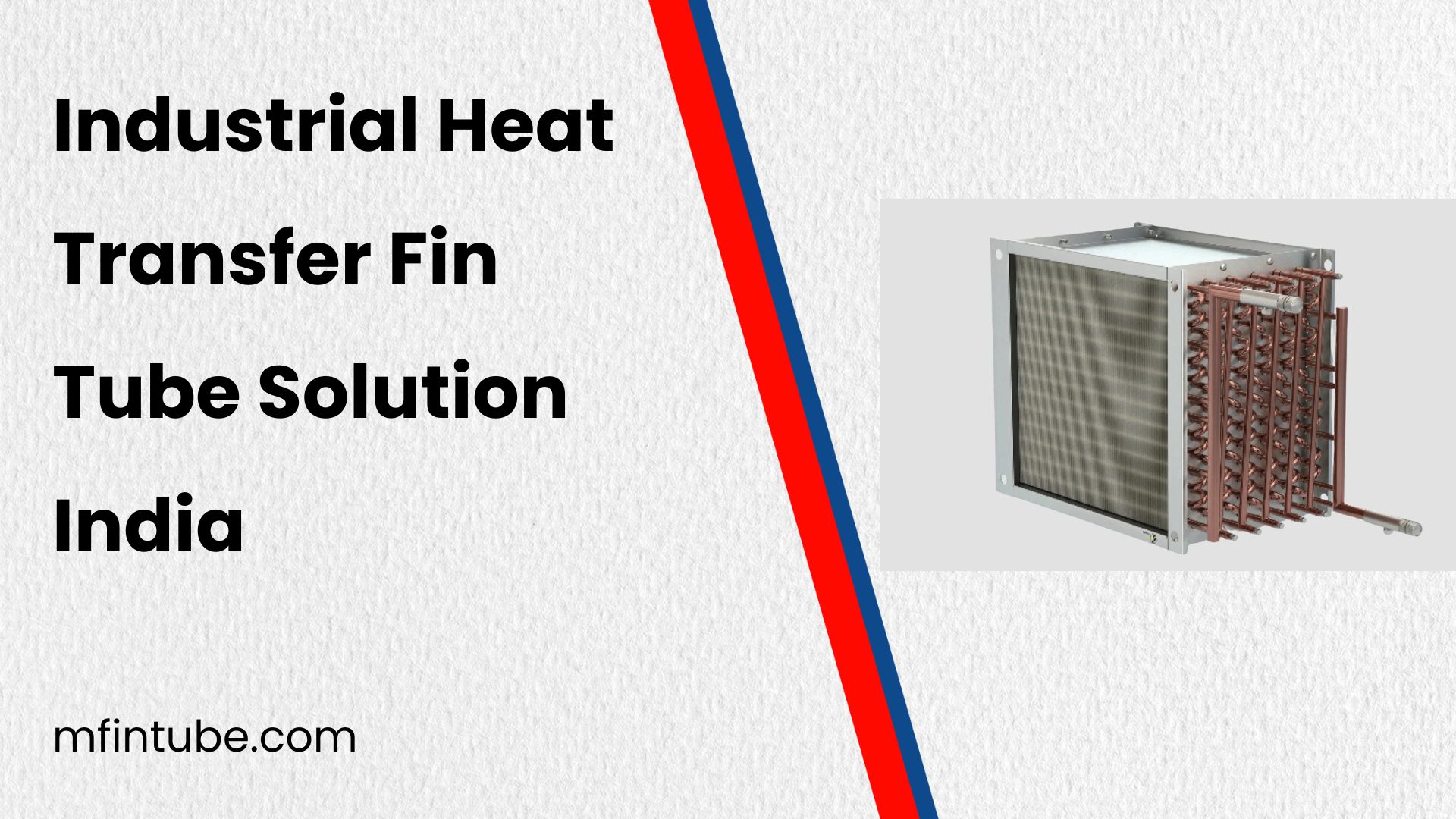
A fin tube consists of a primary tube fitted with extended surfaces called fins. These fins increase the external surface area available for heat transfer. Depending on the application, fins may be manufactured from materials such as aluminium, carbon steel, stainless steel, or other alloys, while the base tube is selected according to pressure, temperature, corrosion, and fluid compatibility.
An industrial heat transfer fin tube solution India can be incorporated into heat exchangers, air heaters, economizers, boilers, radiators, condensers, reheaters, and other thermal equipment.
The overall design depends on factors such as heat duty, operating temperature, fluid properties, pressure drop, available space, fouling conditions, and required efficiency.
Key Features of Fin Tube Heat Transfer Solutions
Increased Heat Transfer Area
The primary advantage of fins is the additional surface area they provide. This allows greater heat transfer from a compact tube arrangement, particularly when transferring heat between a liquid or steam and air or gas.
Multiple Fin Configurations
Fin tubes are available in different configurations, including longitudinal, spiral, embedded, extruded, and welded fin arrangements. The appropriate configuration depends on the required thermal performance and operating environment.
Material Flexibility
Different industrial environments require different materials. Carbon steel may be suitable for certain general-purpose applications, while stainless steel and specialised alloys may be preferred for corrosive or high-temperature conditions.
Application-Specific Design
Fin tube systems can be designed around specific heat-transfer requirements. Parameters such as tube diameter, fin height, fin thickness, fin spacing, tube length, and arrangement can be selected according to the application.
Mechanical Durability
Industrial heat-transfer equipment must withstand thermal cycling, vibration, pressure, and continuous operation. Properly engineered fin tubes can provide dependable performance under demanding operating conditions.
Benefits of Industrial Fin Tube Solutions
A properly designed fin tube heat exchanger can provide several operational advantages:
- Higher heat-transfer capacity
- More compact equipment design
- Improved thermal efficiency
- Better utilisation of available installation space
- Potential reduction in energy consumption
- Flexible material and configuration choices
- Reliable performance in continuous industrial applications
- Suitability for a wide range of temperature conditions
For industrial plants, these benefits can contribute to better process control and reduced operating costs when the system is correctly designed and maintained.
Applications and Industries Served
Fin tube heat-transfer systems are used in many industries where controlled heating, cooling, condensation, or heat recovery is required.
Power Generation
Fin tubes can be used in air preheaters, economizers, cooling systems, and other thermal equipment associated with power-generation facilities.
Chemical and Petrochemical Industries
Chemical processing plants often require controlled heat transfer for process heating, cooling, condensation, and temperature management.
Oil and Gas
Fin tube assemblies can support heating and cooling applications in oil and gas processing facilities where equipment reliability and material compatibility are important.
HVAC and Refrigeration
Finned tubes are commonly used in air-conditioning, refrigeration, evaporator, condenser, and air-heating systems because fins increase the surface area available for air-side heat transfer.
Food and Beverage Processing
Industrial heating and cooling systems used in food processing can incorporate finned heat-transfer components for controlled thermal operations.
Pharmaceutical Manufacturing
Process temperature control is important in pharmaceutical facilities. Appropriately selected heat-transfer equipment can support heating and cooling requirements while maintaining process consistency.
General Manufacturing
Industrial ovens, dryers, process heaters, heat recovery units, and ventilation systems can also benefit from finned tube technology.
Why Fin Tube Heat Transfer Is Important
Heat exchangers often face a design challenge when one fluid has a significantly lower heat-transfer coefficient than another. Air and gases, for example, generally require a larger heat-transfer surface compared with many liquids.
Fins address this limitation by increasing the effective external surface area. This can enable engineers to achieve the required heat-transfer duty within a more practical equipment footprint.
An industrial heat transfer fin tube solution India can therefore be valuable for facilities seeking efficient thermal performance while managing space, energy consumption, and equipment costs.
Factors to Consider Before Choosing a Fin Tube Solution
Heat Duty
Determine the required heat-transfer capacity under actual operating conditions. Undersized equipment may fail to meet process requirements, while excessive capacity can increase capital costs.
Operating Temperature and Pressure
Tube and fin materials should be selected according to the maximum and minimum operating temperatures and pressures.
Fluid Properties
Density, viscosity, thermal conductivity, corrosiveness, and fouling characteristics can significantly affect heat-exchanger performance.
Fin Material and Geometry
Fin height, thickness, pitch, configuration, and material influence heat-transfer efficiency, pressure drop, durability, and manufacturability.
Corrosion and Fouling
Industrial environments may expose heat-transfer equipment to corrosive fluids, dust, moisture, or deposits. Material selection and fin geometry should account for these conditions.
Maintenance Requirements
Consider accessibility for inspection, cleaning, repairs, and replacement. Easy maintenance can help preserve thermal performance throughout the equipment lifecycle.
Total Cost of Ownership
The purchase price is only one part of the overall investment. Buyers should also consider energy consumption, maintenance, expected service life, downtime, and replacement costs.
Mfintube is a trusted name for reliable and application-focused industrial heat transfer fin tube solution India, offering engineered solutions designed to support efficient thermal performance across demanding industrial applications. With a strong focus on quality, precision, and practical engineering requirements, Mfintube provides dependable fin tube solutions suitable for diverse heat-transfer needs. The organization, a seasoned supplier of industrial heat transfer fin tube solution India, places a strong emphasis on reliable performance, effective heat transfer, and sturdy construction. Mfintube is a reliable alternative for industrial heat transfer fin tube solution India since it offers professionally developed solutions that are customized to meet their operating needs.
Looking for a reliable industrial heat transfer fin tube solution India? Choose Mfintube for professionally engineered, durable, and efficient fin tube solutions designed for demanding industrial applications. Contact Mfintube today to discuss your heat-transfer requirements and find the right solution for your plant.
Latest Industry Trends in Fin Tube Heat Transfer
The industrial heat-transfer sector is increasingly focused on energy efficiency, compact equipment, heat recovery, and improved materials. Manufacturers and engineering teams are exploring advanced fin geometries to increase thermal performance while controlling pressure drop.
Digital engineering and thermal simulation are also becoming important during equipment design. Computational analysis can help engineers evaluate airflow, temperature distribution, pressure loss, and fin efficiency before manufacturing.
Another major trend is waste-heat recovery. Industries are increasingly looking for ways to capture heat from exhaust gases and reuse it for feedwater heating, air preheating, process heating, or other applications. Fin tube heat exchangers can play an important role in these energy-recovery systems.
Sustainability is also influencing material selection and equipment design. Longer service life, reduced energy consumption, improved heat recovery, and efficient maintenance are increasingly important considerations for industrial buyers.
Best Practices for Maintaining Fin Tube Performance
Regular inspection is essential for maintaining heat-transfer efficiency. Dust, dirt, scale, and other deposits can reduce the effective heat-transfer area and restrict airflow.
Plants should monitor inlet and outlet temperatures, pressure drop, flow rates, and other relevant operating parameters. Cleaning schedules should be based on actual operating conditions rather than relying only on fixed intervals.
Early detection of corrosion, fin damage, tube leakage, or mechanical deformation can prevent larger operational problems and extend equipment service life.
Conclusion
Fin tube technology provides an effective approach to improving heat transfer where increased surface area is required, particularly in air-side and gas-side applications. From power generation and chemical processing to HVAC, refrigeration, food processing, and general manufacturing, finned heat-transfer systems support a wide range of industrial processes.
When evaluating an industrial heat transfer fin tube solution India, buyers should consider thermal performance, materials, operating conditions, corrosion resistance, pressure drop, maintenance requirements, and lifecycle cost. A properly engineered solution can provide dependable heat transfer while supporting energy efficiency, compact equipment design, and long-term process reliability.
Frequently Asked Questions
1. What is a fin tube used for?
A fin tube increases the available heat-transfer surface area and is commonly used in heating, cooling, condensation, heat recovery, air heating, and other thermal applications.
2. Why are fins added to heat-transfer tubes?
Fins increase the external surface area of the tube. This is particularly useful when heat is transferred between a liquid or steam and air or gas, where the air-side heat-transfer coefficient is relatively low.
3. Which materials are commonly used for fin tubes?
Common materials include carbon steel, stainless steel, aluminium, and specialised alloys. Material selection depends on temperature, pressure, corrosion, fluid compatibility, and application requirements.
4. How can fin tube heat-transfer efficiency be maintained?
Regular cleaning, inspection, monitoring of temperature and pressure drop, proper fluid flow, and timely repair of damaged fins or tubes can help maintain thermal performance.
5. What should industries consider before selecting fin tube equipment?
Industries should evaluate heat duty, operating temperature and pressure, fluid properties, fin configuration, material compatibility, corrosion and fouling risks, pressure drop, maintenance requirements, installation space, and total lifecycle cost.