
Industrial Refrigeration Equipment Price in India: 2026 Cost Guide
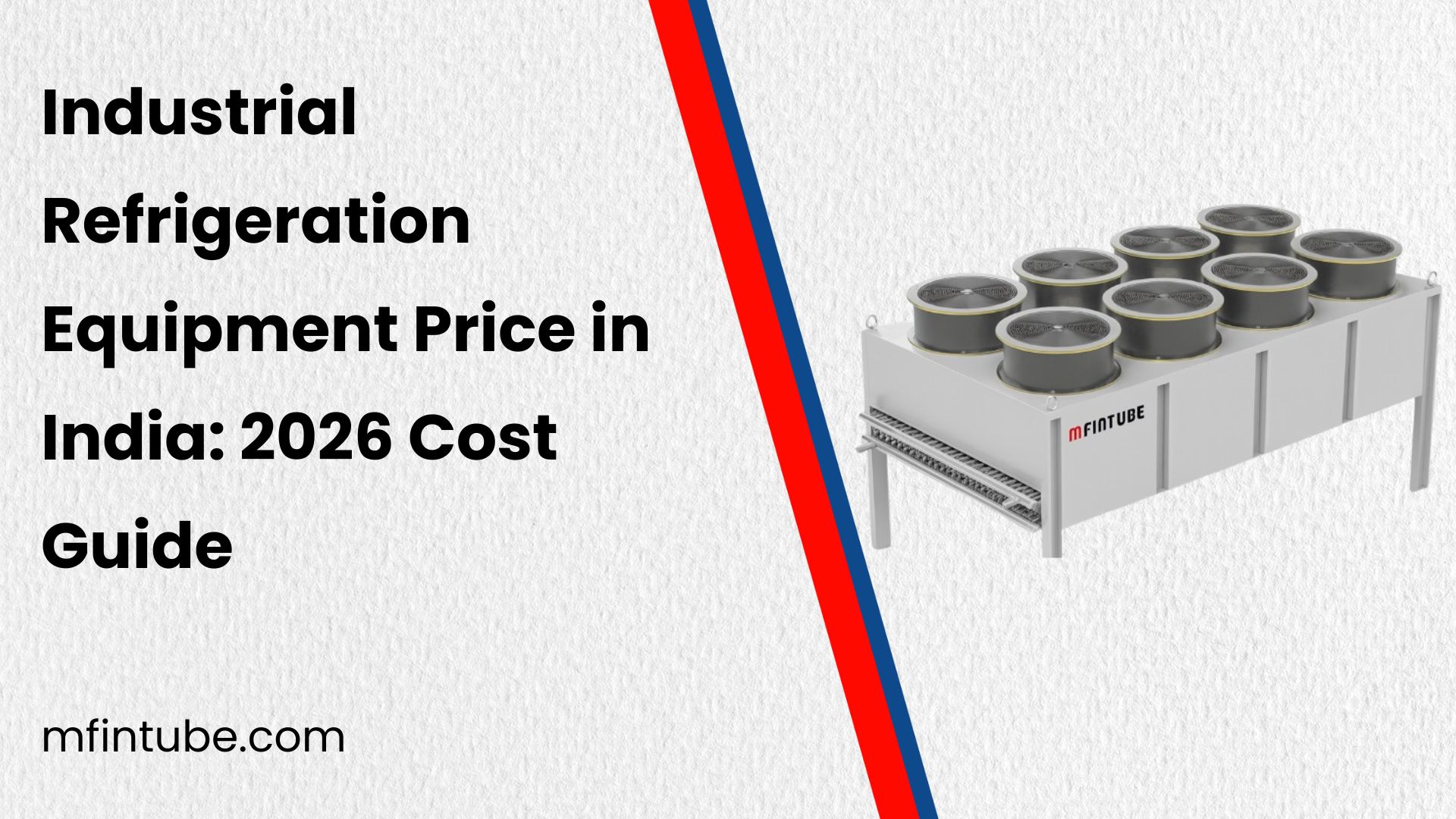
India’s cold chain and industrial cooling sector continues to expand rapidly in 2026, driven by growth in food processing, pharmaceuticals, dairy, and logistics. Selecting the right industrial refrigeration equipment in India requires a clear understanding of current pricing, system types, and long-term ownership costs. This guide breaks down realistic 2026 price ranges, key cost drivers, and practical considerations for buyers planning new installations or upgrades.
Understanding Industrial Refrigeration Systems
Industrial refrigeration typically relies on vapor-compression cycles using ammonia (R717) for larger plants or lower-GWP HFCs and natural refrigerants for smaller or specialized applications. Core components include compressors, condensers, evaporators (air coolers), receivers, valves, controls, and piping. Ammonia systems dominate large cold stores because of high efficiency and low refrigerant cost, while packaged or modular units suit smaller facilities.
Prices vary widely based on capacity (measured in TR or kW), temperature range (chilled +2°C to +8°C versus frozen –18°C to –35°C), refrigerant choice, automation level, and whether the system is custom-engineered or standardized.
2026 Price Ranges for Key Equipment
Compressors
Reciprocating compressors for industrial use generally range from ₹12,000 to ₹1.8 lakh or more depending on capacity and brand. Screw compressors, preferred for larger continuous-duty applications above roughly 100 kW, command higher prices. Scroll and inverter models used in commercial or smaller industrial setups fall between ₹15,000 and ₹2.5 lakh. High-efficiency or specialized low-temperature units sit at the upper end.
Condensing Units and Condensers
Air-cooled or water-cooled condensing units for cold rooms start around ₹35,000–₹1.5 lakh for smaller capacities (5–10 TR). Industrial ammonia evaporative condensers or larger air-cooled units can range from several lakhs to ₹10–20 lakh or more for high-capacity systems. Evaporative condensers for ammonia plants are commonly quoted in the multi-lakh range depending on tonnage.
Evaporators and Air Coolers
Unit coolers and evaporators for cold rooms or processing areas typically range from ₹60,000 to several lakhs. Industrial ammonia air-cooling units and finned-tube evaporators scale with airflow (m³/h) and temperature duty. Specialty coils with corrosion-resistant coatings or enhanced fin designs cost more but improve longevity in harsh environments.
Complete Systems and Plants
A basic industrial refrigeration package for a small facility (around 30 TR) may start near ₹9–25 lakh. Larger ammonia refrigeration plants for multi-chamber cold stores frequently fall in the ₹50 lakh to several crore range once compressors, condensers, evaporators, controls, and installation are included. For context, refrigeration equipment often represents 25–38% of total cold-storage project cost.
Cold Storage Project Benchmarks (Equipment Share)
- Small modular cold rooms (10–50 MT): total project ₹12–90 lakh; refrigeration portion significant but variable.
- Medium multi-commodity stores (100–1,000 MT): total project often ₹85 lakh–₹4 crore; refrigeration plant commonly ₹35–50 lakh or higher for 1,000 MT scale.
- Larger facilities (2,000–5,000 MT): total investments of several crores, with refrigeration systems forming a major capital line item.
These figures exclude land and can shift with insulation thickness, automation, and site conditions. Government cost norms under schemes such as NHB provide subsidy ceilings (around ₹8,000–₹10,000 per MT for eligible Type 1/Type 2 stores) but actual market costs are higher.
Factors That Influence Price in 2026
Several elements shape final quotes:
-
Capacity and temperature duty:
Lower temperatures and larger loads increase compressor size, insulation needs, and evaporator surface area.
- Refrigerant and environmental compliance:
India’s HCFC phase-out and upcoming HFC phase-down favor ammonia and low-GWP options. These choices affect both equipment design and long-term operating costs.
- Energy efficiency:
High-efficiency screw compressors, variable-speed drives, and optimised heat exchangers raise upfront cost but reduce electricity, which often dominates operating expenses.
- Materials and coatings:
Stainless-steel components, special fin materials, or protective coatings (for corrosive or food-grade environments) add to price.
- Automation and monitoring:
PLC controls, remote monitoring, and data logging increase initial investment yet improve reliability and compliance, especially for pharma or export-oriented facilities.
- Location and installation:
Site preparation, electrical infrastructure, and skilled labor vary by region. Import content in compressors or controls can introduce currency and duty sensitivity.
Total cost of ownership matters more than purchase price alone. Energy can account for the majority of lifetime expenditure; efficient design and quality heat-transfer surfaces therefore deliver better returns over 10–15 years.
Practical Buying Considerations
Buyers should request detailed heat-load calculations rather than relying solely on capacity labels. Compare offerings on part-load efficiency, service network, and spare-parts availability. Modular designs can ease expansion, while centralised ammonia plants suit high-utilisation multi-chamber facilities. Always factor in backup power, as refrigeration downtime carries high product-risk costs.
When evaluating industrial refrigeration equipment in India, prioritise suppliers with proven experience in the specific application—whether potato bulk storage, multi-temperature hubs, or process cooling for dairy and beverages.
Looking Ahead
Demand for reliable, energy-efficient systems is expected to remain strong as cold-chain capacity expands and older plants are modernised. Focus on systems that balance capital cost with operating efficiency and regulatory readiness will separate successful projects from costly ones.
In this evolving landscape, manufacturers that combine robust heat-exchanger engineering with application-specific design play an important role. Mfintube has established itself as a dependable source for finned-tube evaporators, air-cooled and evaporative condensers, and industrial air-cooling units tailored to refrigeration duties. Their focus on quality manufacturing and customised thermal solutions supports facilities seeking durable performance across food processing, cold storage, and related industries.
Frequently Asked Questions
1. What is the typical price range for industrial refrigeration equipment in India in 2026?
Individual components such as compressors start from tens of thousands of rupees, while complete small-to-medium systems range from several lakhs to a few crores depending on capacity, refrigerant, and temperature requirements.
2. How much of a cold-storage project budget goes to refrigeration equipment?
Refrigeration plant and related equipment commonly account for 25–38% of total project cost (excluding land), with the exact share depending on temperature class and automation level.
3. Is ammonia still preferred for large industrial systems?
Yes. Ammonia remains the standard for large cold stores in India due to its thermodynamic efficiency, low GWP, and cost-effectiveness, provided safety and compliance measures are properly implemented.
4. What additional costs should buyers expect beyond equipment?
Installation, piping, electrical works, controls, commissioning, insulation integration, and ongoing energy and maintenance form significant parts of total ownership cost.
5. How can buyers improve long-term value?
Prioritise accurate heat-load design, high-efficiency components, quality heat exchangers, and suppliers offering reliable after-sales support. Evaluating total cost of ownership over 10+ years usually yields better decisions than focusing only on initial price.
Ready to Specify Your Next System?
If you are planning an upgrade or new installation of industrial refrigeration equipment in India, detailed engineering support and application-matched heat-transfer components make a measurable difference. Reach out to Mfintube for technical discussions on evaporators, condensers, and air-cooling units suited to your capacity and temperature needs. Accurate specification today helps control both capital and operating costs tomorrow.
Read More: Industrial Refrigeration Equipment Price in India: 2026 Cost Guide