Buy Industrial Cooling Coils Online in India: Specifications and Buying Tips
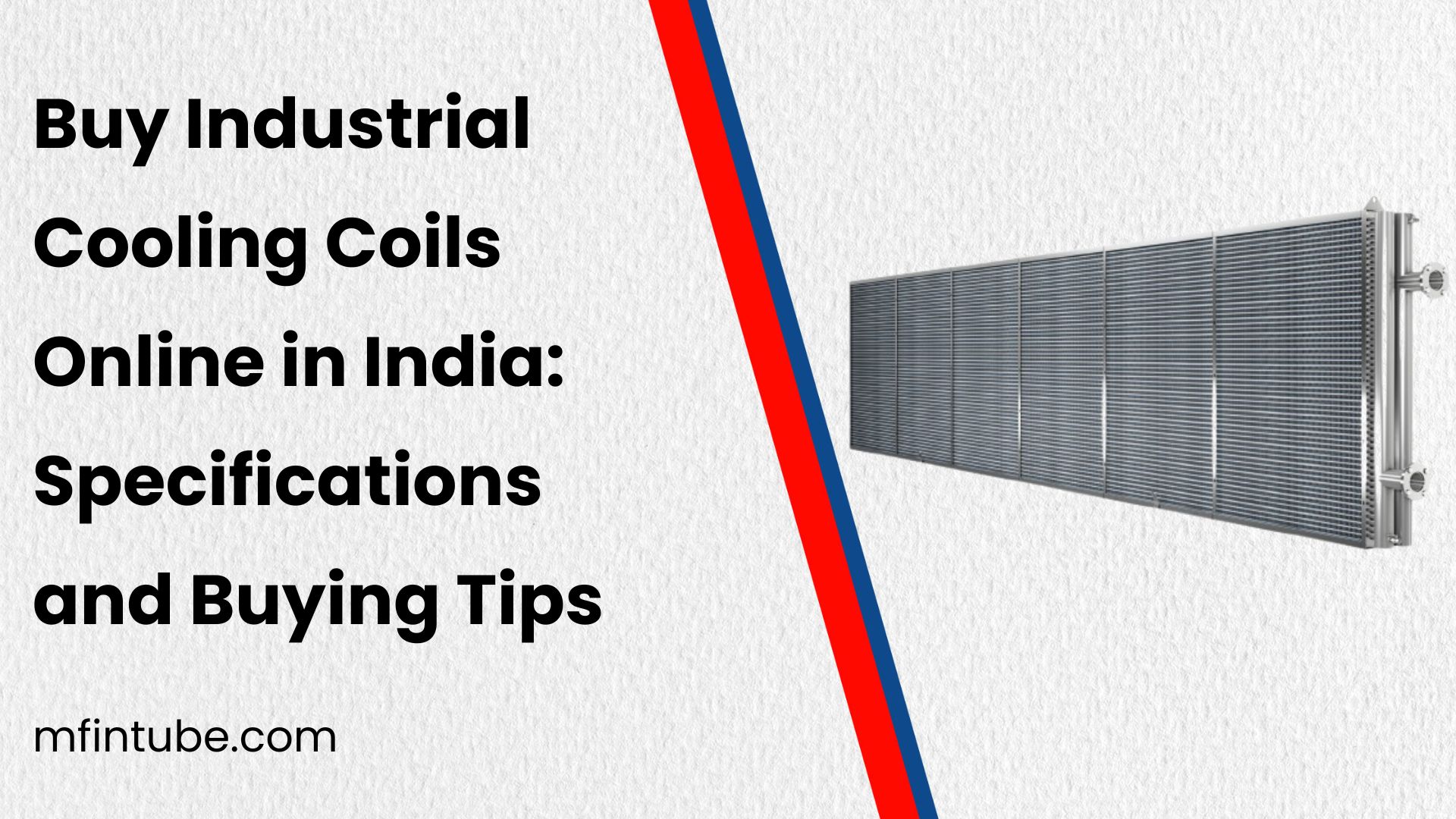
Industrial cooling coils are heat transfer components designed to remove heat from air, water, or process fluids and maintain the required operating temperature in industrial systems. Businesses looking to buy cooling coils online India should evaluate cooling capacity, material compatibility, operating conditions, pressure drop, and supplier expertise before selecting a product.
India's industrial environment presents several cooling challenges, including high ambient temperatures, varying water quality, humidity, corrosion, and increasing energy costs. Selecting the right cooling coil helps maintain process stability, improve heat transfer efficiency, and reduce maintenance requirements. Understanding coil types, materials, and technical specifications makes the purchasing process more reliable.
Understanding the Indian Industrial Cooling Coil Market
Industrial cooling requirements in India vary according to geographical conditions and manufacturing processes. Facilities operating in hot regions may experience higher cooling loads, while industries in coastal areas often face corrosion-related challenges due to humidity and salt exposure.
Water scarcity is another important consideration. Cooling systems that use water or brine must be designed to support efficient heat transfer without unnecessary resource consumption. Similarly, rising electricity costs make energy-efficient coil designs important for controlling operating expenses.
Some common factors influencing cooling coil selection include:
- High ambient temperatures: Cooling equipment must maintain the required performance during demanding summer conditions.
- Water quality: Hard water, dissolved minerals, and impurities can contribute to scaling and corrosion.
- Energy consumption: Poor coil selection can increase fan power and refrigeration system workload.
- Corrosion resistance: Material selection must consider moisture, chemicals, and environmental exposure.
- Maintenance requirements: Accessible designs and suitable materials help simplify inspection and cleaning.
For industrial buyers, the objective should be to select a coil that meets the actual process requirements rather than choosing a product based only on its dimensions or initial price.
Types and Materials of Industrial Cooling Coils
Different industrial processes require different cooling and heating arrangements. Cooling coils are generally selected according to the working fluid, temperature range, heat transfer requirements, and operating environment.
1. Chilled Water and Brine Cooling Coils
Chilled water coils are commonly used in HVAC systems, industrial air handling units, and process cooling applications. Cold water circulates through the coil tubes, absorbing heat from the surrounding air.
Brine cooling coils are suitable for applications requiring lower operating temperatures, including certain food processing, cold storage, and refrigeration systems.
The material and circuit arrangement should be selected according to the fluid's chemical properties and required cooling capacity.
2. Steam and Hot Water Coils
Steam and hot water coils are primarily used for heating applications. Steam or heated water circulates through the tubes and transfers thermal energy to the surrounding air or process medium.
These coils are commonly installed in industrial air handling systems, drying equipment, and manufacturing facilities where controlled heating is necessary.
3. Thermic Fluid Coils
Thermic fluid coils are designed for systems using thermal oil or other heat transfer fluids. They are suitable for industrial applications that require controlled heating at elevated temperatures.
Their design must account for fluid properties, operating pressure, temperature, and material compatibility.
4. Multi-Material Cooling Coil Options
A multi-material cooling coil in India offers flexibility when industrial applications require different combinations of corrosion resistance, thermal conductivity, mechanical strength, and weight.
Common material options include:
- Copper tubes: Provide good thermal conductivity and are widely used in HVAC and refrigeration applications.
- Stainless steel tubes: Suitable for applications where corrosion resistance and material compatibility are important.
- Aluminium-magnesium fins: Offer lightweight construction and can provide improved corrosion resistance in suitable environments.
- Protective coatings: Hydrophilic, epoxy, or other application-specific coatings can provide additional surface protection.
Material combinations should be selected after evaluating the working fluid, operating environment, and required service life.
Cooling Coil Types and Their Industrial Applications
|
|
|
|
|
|
|
|
|
|
|
|
|
|
|
|
|
|
|
|
|
|
|
|
|
|
|
|
|
|
Specifications and Buying Tips for Industrial Cooling Coils
Before placing an order, industrial buyers should evaluate the following technical and commercial factors.
1. Cooling Capacity and Thermal Duty
Determine the required cooling or heating capacity based on the process load, inlet and outlet temperatures, airflow, and operating conditions. An undersized coil may fail to achieve the desired temperature, while an oversized coil can increase initial investment and system requirements.
2. Material of Construction
Select tube, fin, casing, and coating materials according to the working environment. Copper may suit conventional HVAC applications, while stainless steel may be preferable for specific corrosive or demanding industrial environments.
3. Fin Spacing and Air Pressure Drop
Fin spacing directly influences heat transfer surface area, airflow resistance, and cleaning requirements. Closely spaced fins can increase heat transfer area but may also become more susceptible to dust accumulation and blockage.
4. Operating Temperature and Pressure
Check the maximum and minimum operating temperatures, working pressure, and design pressure. The selected coil must be compatible with the system's operating conditions and applicable engineering requirements.
5. Dimensions and Installation Compatibility
Confirm the coil's length, width, depth, connection sizes, tube arrangement, and mounting configuration. Correct dimensions help prevent installation problems and unnecessary modifications.
6. Manufacturing Lead Time
Discuss production schedules, material availability, inspection requirements, and delivery timelines before confirming the order. Customized coils may require additional design and manufacturing time.
7. After-Sales Support
Evaluate whether the manufacturer provides technical assistance, installation guidance, documentation, and support for maintenance-related queries. These services are important for maintaining long-term equipment performance.
Applications of Industrial Cooling Coils Across Industries
Industrial cooling coils support temperature management across several manufacturing and infrastructure sectors.
- Food Processing: Used in refrigeration, cold storage, air cooling, and temperature-controlled processing environments.
- Pharmaceuticals: Support controlled air-conditioning and temperature management in manufacturing and storage facilities.
- Chemical Processing: Helps maintain process temperatures in systems handling different industrial fluids.
- HVAC: Installed in air handling units and ventilation systems for commercial and industrial buildings.
- Data Centers: Used in air-conditioning and cooling infrastructure to maintain suitable operating conditions for IT equipment.
- Power Generation: Supports auxiliary cooling and temperature control in selected plant systems.
Each application has different thermal, environmental, and operational requirements. Therefore, coil design should be based on the actual process rather than a standard specification alone.
Why Choose Mfintube for Industrial Cooling Coils?
Mfintube brings over 20 years of industry experience in cooling coil and heat transfer solutions. Its approach combines application-specific engineering with customized design software to develop coils according to different industrial requirements. The company's multi-material manufacturing capability supports the selection of suitable tube, fin, and coating combinations for different operating environments. Its focus on customised designs and streamlined manufacturing processes also supports shorter lead times, subject to material availability and project specifications. For industrial buyers, these capabilities are relevant when evaluating cooling coil solutions for HVAC, refrigeration, and process cooling applications.
Frequently Asked Questions
1. What should I check before buying industrial cooling coils online in India?
Check cooling capacity, working fluid, material of construction, operating temperature, pressure rating, dimensions, and pressure drop. Also evaluate the manufacturer's technical support and delivery commitments.
2. Which material is best for industrial cooling coils?
The best material depends on the application and operating environment. Copper offers good thermal conductivity, while stainless steel is suitable for applications requiring specific corrosion resistance and mechanical properties.
3. What is the difference between chilled water and brine cooling coils?
Chilled water coils use chilled water as the heat transfer medium, generally for conventional cooling applications. Brine coils use a brine solution and are suitable for certain low-temperature refrigeration requirements.
4. Can cooling coils be customized for industrial applications?
Yes. Manufacturers can customize coil dimensions, tube materials, fin configurations, circuits, and connections according to the required thermal duty and installation conditions.
5. How can I improve the operating efficiency of industrial cooling coils?
Select the correct coil capacity, maintain appropriate airflow, clean the coil surfaces regularly, and monitor fluid flow and pressure drop. Proper maintenance helps maintain heat transfer performance and reduce unnecessary energy consumption.
Conclusion
Selecting the right industrial cooling coil requires a combination of thermal calculations, material evaluation, and application-specific engineering. Indian industries should consider ambient conditions, water quality, corrosion resistance, energy consumption, and maintenance requirements before purchasing. Businesses planning to buy cooling coils online India should work with experienced manufacturers that can provide customized solutions and technical guidance.
CTA
Looking for reliable industrial cooling coil solutions? Contact Mfintube to discuss your application, material preferences, thermal requirements, and customized coil specifications. Get technical assistance to identify a suitable solution for your industrial cooling requirements.
Read More: Buy Industrial Cooling Coils Online in India: Specifications and Buying Tips